


 Key Takeaways (TL;DR)
- Cheap charging cables can permanently damage your phone’s battery and charging port.
- Uncertified cables carry real risks of overheating, data theft, and even fire.
- Spending a little more on a quality, certified cable protects a device worth Rs. 50,000–200,000+.
Every day in Pakistan, thousands of people plug a cheap Rs. 100 cable into a phone worth lakhs — and think nothing of it. What we’ve consistently observed at Phonewaly.pk is that most phone charging port damage, swollen batteries, and slow charging complaints trace back to one culprit: a low-quality, uncertified charging cable.
This post breaks down exactly what’s happening inside that flimsy wire and why it’s a decision you’ll eventually regret.
What Makes a Charging Cable “Cheap”?
A cheap cable isn’t just about price. It’s about what’s missing inside.
In my professional experience reviewing dozens of cable samples, budget cables typically cut corners in three key areas:
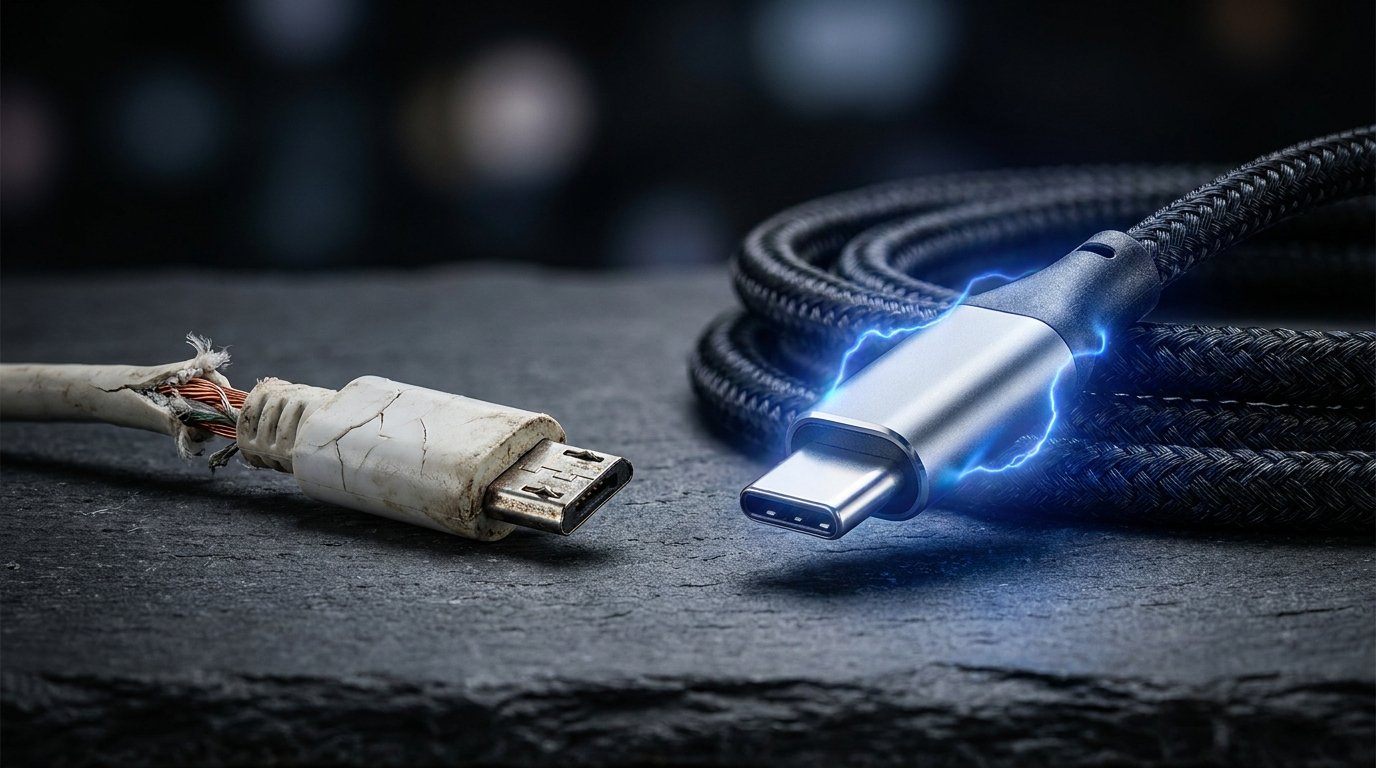
- Thin copper wiring — fewer strands mean higher resistance, slower charging, and more heat
- No chip verification — quality USB-C and Lightning cables have authentication chips; cheap ones don’t
- Flimsy insulation — the outer jacket cracks within weeks, exposing live wires
The result? Your phone works harder, charges slower, and degrades faster.
The Real Dangers of Using a Cheap Charging Cable
1. Battery Damage
Cheap cables deliver inconsistent voltage. Instead of a steady 5V/9V feed, your battery receives irregular spikes. Over weeks, this degrades battery health faster than normal use — and battery replacements in Pakistan cost Rs. 3,000–8,000+.
2. Charging Port Damage
Low-quality connectors wear out your phone’s port. The fit is looser, the metal contacts scrape imprecisely, and the port loosens over time. Port repairs are often more expensive than the cable you tried to save money on.
3. Overheating Risk
High resistance in thin wires converts electrical energy into heat. We’ve seen cables that become uncomfortably hot after 10 minutes of use. In extreme cases — especially overnight charging — this is a fire hazard.
4. Slow or Unreliable Fast Charging
Your phone has fast charging protocols (VOOC, PD, Quick Charge). A cheap cable without the right internal wiring physically cannot support these protocols. You’re paying for a fast charger but getting slow charging speeds.
5. Data Security Risk
Some counterfeit cables — particularly USB-C to USB-A — contain hidden chips that can intercept data. This is rare but documented. Using an unverified cable at a public port with such a cable is a security risk.
Cheap Cable vs. Quality Cable: Side-by-Side Comparison
| Feature | Cheap Cable (Rs. 100–300) | Quality Cable (Rs. 800–2,000) |
|---|---|---|
| Copper wire strands | Low (thin, few strands) | High (thick, multi-strand) |
| Fast charging support |  Usually not supported Usually not supported |
 Full protocol support Full protocol support |
| Authentication chip | None |
Present (MFi / USB-IF) |
| Heat generation | High (unsafe) | Low (within safe limits) |
| Average lifespan | 2–8 weeks | 1–3 years |
| Battery health impact | Degrades faster | Minimal degradation |
| Data transfer speed | Slow / unreliable | Full rated speed |
| Cost per year (approx.) | Rs. 1,200–2,400 (replacements) | Rs. 800–2,000 (one-time) |
The math is clear: cheap cables cost more in the long run.
What Certifications Should You Look For?
Not all quality claims are equal. Here’s what actually matters:
- MFi Certified — Apple’s “Made for iPhone/iPad” program. Required for reliable Lightning cables.
- USB-IF Certified — The official USB Implementers Forum certification for USB-C cables.
- E-Marker Chip — Required for USB-C cables supporting 60W+ power delivery.
If a cable has none of these, treat it as uncertified — regardless of what the packaging claims.
 Shop Certified Charging Cables at Phonewaly.pk
We stock original and MFi/USB-IF certified cables for iPhone, Samsung, and all Android devices — with fast delivery across Pakistan. Browse Charging Cables →
How to Spot a Bad Cable Before You Buy
Physical Signs
- Connector feels loose or wobbly in the packaging
- Cable is lighter than expected (thin copper inside)
- No brand name, certification logo, or country of manufacturing info
- Suspiciously low price — under Rs. 300 for a USB-C cable is a red flag
Performance Signs (After Purchase)
- Gets warm within minutes of use
- Charging speed noticeably slower than your charger’s rated output
- Phone shows “accessory not supported” or “charging not optimized” warning
- Cable stops working after a few weeks
Is Any Budget Cable Safe?
Yes — but with conditions. Some mid-range brands (Anker, Baseus, Ugreen) offer budget-friendly cables that are still properly certified and built to standard. What you want to avoid are completely unbranded, bazaar-quality cables with no traceability.
What we’ve observed in the market is that a cable between Rs. 800–1,500 from a known brand consistently outperforms Rs. 150–300 unbranded alternatives in both lifespan and safety — every single time.
The Bottom Line
Your phone is one of your most expensive daily tools. Protecting it with a Rs. 150 cable is like buying insurance on a car and then using bicycle brakes. The risk simply isn’t worth it.
Invest in one good cable. Your battery, your charging port, and your peace of mind will thank you.
Ready to Switch to a Reliable Cable?Phonewaly.pk offers original, certified cables for every device — iPhone, Samsung, Oppo, Vivo, and more. Free delivery available on orders above Rs. 1,500. Shop Now at Phonewaly.pk →
Frequently Asked Questions
1. Can a cheap charging cable really damage my phone’s battery?
Yes. Cheap cables deliver inconsistent voltage which causes irregular charge cycles, directly accelerating battery degradation over time.
2. Why does my phone charge slowly with a new cable I just bought?
Most likely your cable doesn’t support your phone’s fast charging protocol. A Rs. 150 cable cannot support VOOC, PD, or Quick Charge even if your charger does.
3. Are cheap USB-C cables dangerous?
They can be. USB-C cables without an E-Marker chip can cause overcurrent situations when used with high-wattage chargers, leading to overheating or component damage.
4. How do I know if a charging cable is original or fake?
Look for certification logos (MFi, USB-IF), a recognizable brand name, and buy from a trusted retailer. Fake cables often have loose connectors and very light weight.
5. What is the best charging cable brand available in Pakistan?
Anker, Baseus, and Ugreen are reliable mid-range options. For Apple devices, always use MFi-certified cables. Phonewaly.pk stocks verified options across all brands.
6. Can a bad cable damage my phone’s charging port permanently?
Yes. Poor-fitting connectors and inconsistent current can wear down port contacts over time, eventually requiring a costly hardware repair.
7. Is it safe to charge my phone overnight with any cable?
Only with a quality, certified cable. Cheap cables generate excess heat overnight, which is both a battery health and fire safety concern.
8. What wattage cable do I need for fast charging?
For most Android fast charging, you need a cable rated for at least 25W–65W. For iPhones with PD fast charging, a USB-C to Lightning cable rated for 20W minimum is required.
9. Do all USB-C cables support fast charging?
No. USB-C is a connector shape, not a performance standard. A cheap USB-C cable may only support 5W even if your charger outputs 65W.
10. Where can I buy a reliable charging cable in Pakistan with fast delivery?
Phonewaly.pk delivers certified cables across Pakistan. Orders are processed quickly and all products are quality-verified before dispatch.